


Hawk T1
The single-engine Hawk T1 aircraft, produced by Hawker Siddeley, is renowned for its versatility, serving a wide range of roles from pilot training to aerobatics. Visitors to NATO Days in Ostrava could witness the aircraft both in formation and solo displays.
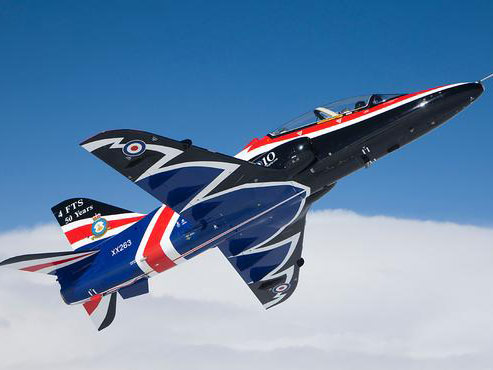
Development of the Hawk began in the late 1960s, as the British Air Force sought a replacement for the Folland Gnat light fighter. The first flight took place in 1974, and by 1976, the initial aircraft had been introduced into training units.
The two-seat configuration allows a cadet and instructor to fly together during advanced pilot training. Thanks to its capacity to carry practice bombs, it can also be used for close air support training. The aircraft has further potential for operational use, with the ability to be armed with two air-to-air missiles and a 30mm ADEN cannon.
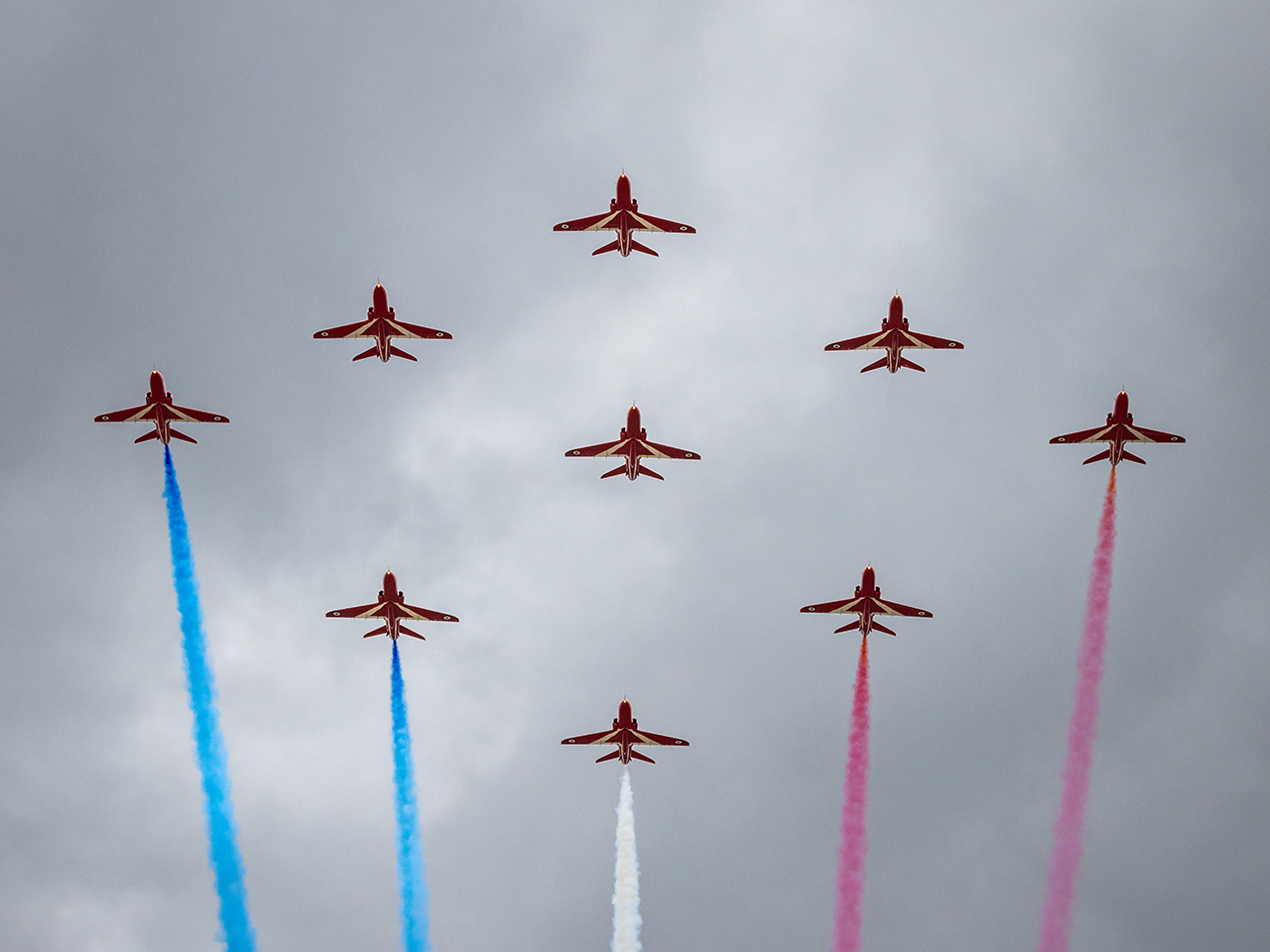
However, the aircraft’s popularity is largely due to its aerobatic performance, with pilots able to exploit its agility and a climb rate of up to 47 metres per second. Since 1980, these characteristics have been utilised by the renowned Red Arrows, the Royal Air Force’s aerobatic display team. Their Hawk T1 aircraft have been modified with reinforced wingtips to enhance pilot safety and aircraft stability. Instead of guns, smoke generators are fitted for display purposes.
In total, over a thousand Hawks of various versions have been produced. The Indian company Hindustan Aeronautics continues to manufacture modified variants under licence. Today, the Hawk remains widely used for training around the world, with operators including the air forces of Finland, Saudi Arabia, and India.
Specifications |
|
|---|---|
| Wingspan | 9.40 m |
| Length | 11.90 m |
| Height | 3.9 m |
| Empty plane weight | 4 480 kg |
| Maximum take-off weight | 9 100 kg |
| Max speed | 1 038 km/h |
| Ceiling | 13 565 m |
| Range | 2 520 km |
Special Partner

Partners