


News
Customs Administration: Reading people is essential // Humans of NATO Days
As a schoolboy, he already wanted to wear the uniform of the Customs Administration of the Czech Republic. Today, he leads the Organisational Staff at the General Directorate of Customs, preparing one of the most prominent presentations of security forces at NATO Days in Ostrava and the Czech Air Force Days. In the interview, Captain Tomáš Stareček talks about the evolution of a customs officer’s work, the behind-the-scenes preparations for this exceptional event, the fight against organised crime, and why serving the state remains a matter close to his heart.
What led you to serve in the Customs Administration of the Czech Republic? Was there a moment when you knew that this was the work you wanted to do long-term?
You probably won’t believe me, but it started in primary school. At that time, the school had a careers officer who recorded future job ambitions. My classmate, who is still a good friend of mine today, wrote down that he wanted to become a firefighter, and the only thing that came to my mind was a customs officer. Perhaps it was also because, as a child, we often travelled with my parents to visit extended family across the border, and I was always fascinated by the customs officers’ green uniform at that time. I must add that the aforementioned classmate is still a professional firefighter today.
The Customs Administration of the Czech Republic has regularly participated in NATO Days since 2003. How did you first get involved in this event? Do you remember your first impressions?
I would divide it into two phases. The first was a passive role, where the task was simply to handle the necessary logistics at the unit. The second was an active role, when I was able to take part in the event in person. I believe it was in 2010, which was also the first year of the Czech Air Force Days. As for my first impressions, I was pleasantly surprised by the large number of visitors who came to Ostrava Airport and by the considerable public interest, which continues to this day.
What still excites, surprises, or fulfils you about being a customs officer after all these years?
Yes, you are asking correctly, even after all these years. I started at the state border, dealing with border issues related to the import of goods. After the Czech Republic joined the EU, I moved inland. Over the several decades that I have served, the Customs Administration of the Czech Republic has undergone several transformations. As a result of these changes, it gained certain competencies but also lost others. And when you ask what fulfils me, it is the department of Investigation, which carries out specific and highly specialised support activities—a true matter close to my heart.
Specific and highly specialised support activities—what does that involve? Can you give a concrete example?
It involves combating criminal groups that carry out sophisticated illegal activities such as the trade in tobacco and tobacco products, illegal arms and military equipment trade, dual-use goods, and last but not least, the illegal trade in narcotics and psychotropic substances.
Looking back, how has the presentation of the Customs Administration of the Czech Republic at this event changed over the years—and how have you changed along with it?
I wouldn’t say our presentation has changed completely; rather, there have been various modern innovations, hopefully for the better. Visitors can see different CITES specimens, and I would say that only with us can they touch or even handle several types of live snakes.
Is there a moment from past events that symbolises what NATO Days mean for the Customs Administration of the Czech Republic?
There are many, and it’s impossible to mention them all. However, I would particularly like to highlight the 20th edition. Due to anti-pandemic measures, this event took place without visitors. As the organiser, you prepared and arranged recognition not only for us but also for other services that played a significant role in measures to combat the COVID-19 pandemic. One little extra detail—during that edition, we were presented with the Ribbon of the Czech Euro-Atlantic Council.
What is your main role in preparing the Customs Administration of the Czech Republic’s participation in NATO Days, and what are your responsibilities?
It actually starts with you, at the Jagello 2000 association, when you send our organisation an invitation. The first step for participation in NATO Days is the issuance of an order by the Director General of the Customs Directorate, establishing the Organisational Staff for NATO Days. Given the complexity of the event, this management act has been issued since 2007. As I have already mentioned, this staff is tasked with proposing and determining the scope of the presentation, coordinating the overall organisation, and preparing demonstrations of our selected activities. It also coordinates cooperation with domestic and international partners. I serve as the head of this staff.
Can you describe something the public usually does not see, but which for you is an annual behind-the-scenes ritual or challenge?
The public certainly does not see the empty airport area on Monday, when preparations begin in earnest. During the week, the area fills not only with our equipment but also with that of other security services, the Czech Army, and other elite units. The public does not see how tents and pavilions gradually appear across the area. I would particularly like to mention the army tents and thank them for their patience with us during the setup. Let me explain why: our Army is sometimes impressively fast—literally. They erect a tent according to the marked spots, and if during preparations we find that there is not enough space for our presentation tent, they immediately find a solution: a few strong men simply move the entire tent a little further.
This year you prepared the Young Customs Officer competition at NATO Days. What led you to engage children and young people in this interactive way? Could you describe the competition in more detail?
I must admit, we had prepared this competition already in 2024, but due to floods that hit the northeast of our country, the 24th edition did not take place. The main aim of the competition was not recruitment, but rather to educate young visitors about our competencies. For this purpose, we set up several stations where “future customs officers” could try out the work of a customs officer. One task, for example, was to find illegal items in a vehicle. For the record, this vehicle had actually been confiscated from drug traffickers. Another attraction was a station with a laser shooting range, which also included first aid and physical training led by our training instructors. Additionally, Dukla participated in conjunction with this competition.
What reactions did you receive from young visitors—and what pleased or surprised you the most about them?
The young visitors approached the tasks enthusiastically and were very active, which delighted us. One could say that the competition followed a “learning through play” concept. Younger children enjoyed having fun and could collect a customs officer package, including a Young Customs Officer service card, after completing all tasks. Older children were thrilled by displays of weapons and the Customs Administration of the Czech Republic vehicle fleet. I believe that, besides the dynamic displays, all visitors also enjoyed the displays by both our and foreign customs dog handlers.
What do you want young people to take away from this competition about being a customs officer and the role of the Customs Administration of the Czech Republic?
Not only young people. Some visitors were surprised to learn that the Customs Administration of the Czech Republic collects certain payments, such as judicial debts, police fines, municipal or labour office fines, etc. They also learned that, under current legislation, we are authorised to stop and inspect vehicles, including their luggage, not only at the borders. Our work is often varied, combining field inspections and enforcement activities with analytical and administrative tasks. For the record, our contribution to the state budget from tax collection is 165 billion CZK.
What is the biggest draw for visitors in the Customs Administration of the Czech Republic tent?
Everyone wants to showcase the best. We have the advantage that our work is extremely diverse, so I will mention at least the most important highlights. Among the attractions are static displays in the field of CITES. To clarify, this is an international convention regulating and controlling trade in endangered species of animals and plants to ensure their survival in the wild. Another attraction is the display of intellectual property issues, such as counterfeits and goods infringing trademarks. There are also customs and tax static displays, where visitors can see an entire illegal cigarette production line, a portable distillery, or confiscated alcohol. I must also mention the Customs Technical Laboratory (CTL), which conducts laboratory testing and analysis of samples for customs, tax, and other control purposes. The laboratory has, for example, a fluorescence spectrometer used in the field to analyse mainly metal alloys, but also to identify heavy metals in toys, and, last but not least, to determine the gold content and carat number in jewellery. Visitors to our tent have their valuables and gold purity checked to ensure authenticity.
Is there a story or situation from the preparations or the event itself that still makes you smile?
It was my first event, and I was assigned the role of the “offender” in a canine demonstration. My task was to smuggle a small bag containing real cocaine through a fictitious checkpoint. The service dog, however, identified it, ending my brief “career” as a smuggler. The bag was worth around 300,000 CZK, and I can tell you that my colleagues kept a very close eye on me throughout the demonstration.
And on the other hand—what was a difficult moment that has now become a valuable experience for you?
That’s a good question, but this is more of an internal matter and remains within our organisational staff.
From a human perspective, what is the most important quality for a customs officer—a trait you would not acquire outside this work?
The key quality of a customs officer is the ability to read people and situations. Daily practice teaches one to distinguish between natural stress and the suspicious behaviour of professional smugglers. The work requires psychological resilience, attention to detail, and the ability to act with respect while enforcing the law. A customs officer notices minor inconsistencies that others overlook and can build a clear picture of the situation from them.
|
|
If you had to choose one thing you want visitors to take away from the Customs Administration of the Czech Republic presentation, what would it be and why?
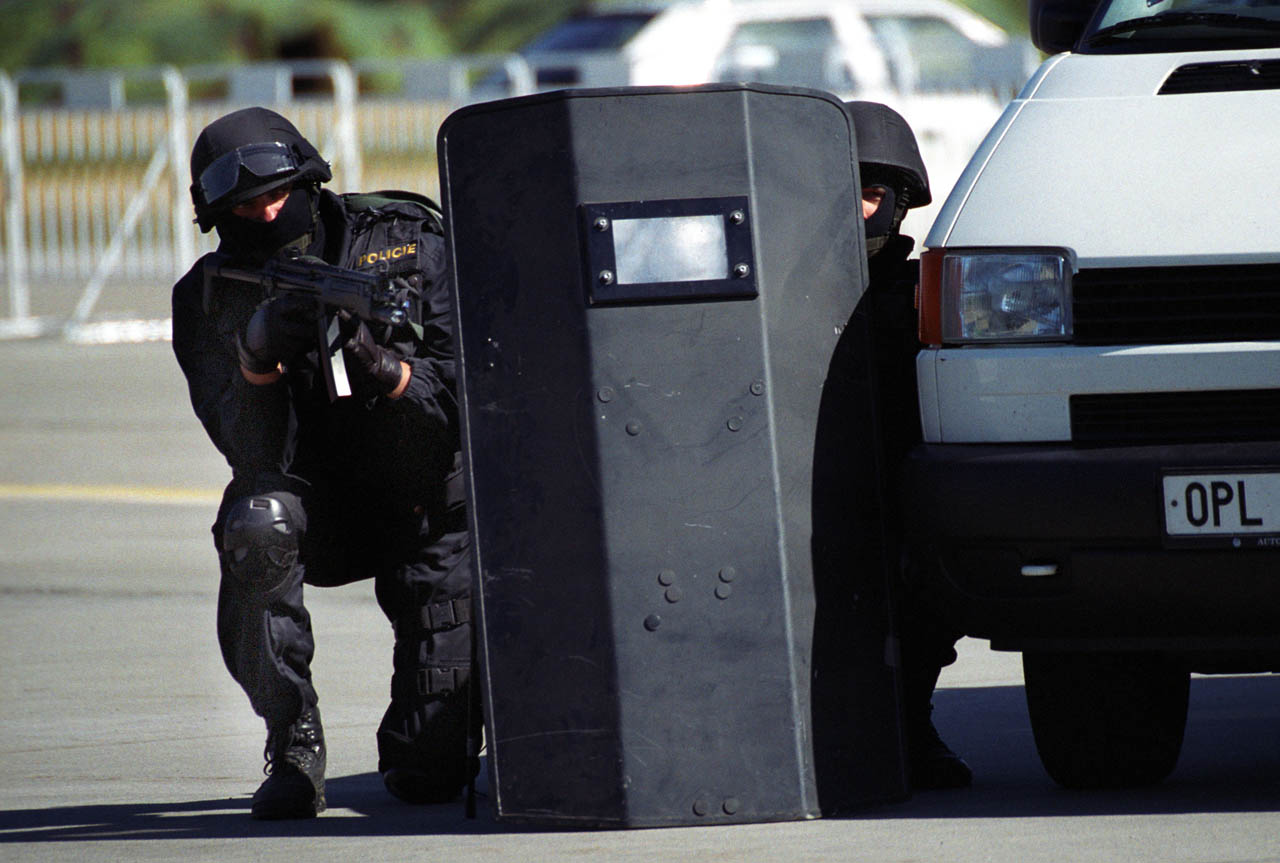
If you will allow me, I will say two things, because one is more personal: first, that visitors should recognise and be able to distinguish different security services. For example, a visitor might go through the Customs Administration of the Czech Republic display and think, “those police officers have it perfectly organised.” The second point is that I believe our presentations of tactical demonstrations, the precision of our dog handlers, and educational programmes clearly show that customs officers can be both professional and approachable to our citizens.
How do you envision the Customs Administration of the Czech Republic’s participation in NATO Days evolving—and do you have a personal idea or dream you would like to realise?
As the scope of the event grows, so does the Customs Administration of the Czech Republic’s presentation. In the future, I can imagine, for example, a joint display with the Czech Air Force.
And more personally—who is Tomáš Stareček when he is not a customs officer? Is there anything people might find surprising or unexpected?
Outside my uniform, I am just an ordinary person with hobbies, joys, and troubles, facing the same everyday problems and life events as anyone else. While I value my work and consider it meaningful, it is still “only” part of my life, not my whole life. I believe that with honest, purposeful, and responsible work, one can go far, and I carry the same principles into my private life.
Would you like to convey something to NATO Days visitors that has not yet been mentioned in this interview?
The alpha and omega of this important social event is you, the visitors. Without you, NATO Days would have no meaning, so on behalf of the Customs Administration of the Czech Republic, I thank you for your interest not only in our Czech armed and security forces but also in allied and international partners with whom we work closely. Finally, I wish that the activities of all the above-mentioned services remain unnecessary and exist solely as demonstrations whenever possible.
Partners














.jpg)