



News
Red Arrows: I’ll never be able to top flying backseat, especially over Prague // Humans of NATO Days
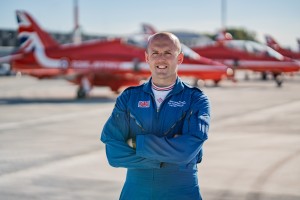
After 13 years, the Red Arrows returned to NATO Days, dazzling the crowd with their precision aerobatics. Cpl Matthew Harris, as Circus 5 and a member of the Red Arrows team, reveals what it’s like behind the scenes, maintaining the aircraft and traveling across Europe with the iconic team.
Last time that Red Arrows performed at the NATO Days was 13 years ago. That was five years before you joined the RAF. Do you remember what you were doing that year?
The last time the RAF Red Arrows were here for NATO Days, it was 2012, and I was in school at the time, still studying my academics before joining the RAF in 2017.
Can you share your story? How did you become an aircraft engineer?
I became an engineer in the RAF in 2017. I started my career on helicopters, working mostly with 7 Squadron and 18 Squadron down at RAF Odiham. I then moved across to the RAF aerobatic team, the Red Arrows. In the 2025 season, I took on the role of being part of the Circus team, where we fly backseat from show to show, looking after the aircraft on the road — a bit like a traveling pit crew for a Formula One team.
Why is that not something else?
I think for me, this job is just something different from the wider Air Force. It’s not been at the tip of the spear, but it’s been in the PR role, showcasing the precision and excellence of the RAF. It’s also about representing our country. We travel to so many different places. I mean, this year alone, we’ve done about 13 different overseas locations. And because of that, it’s just nice to see NATO allies and work with some of the closer nations.
Can you tell us what your role as Circus 5 in the Red Arrows is and what it involves on a daily basis?
My role as Circus 5 is to manage the aircraft documentation. I’m also the team’s weapons technician, which might seem a bit strange since the team doesn’t have weapons, but my responsibility is to look after the ejection seats as they are explosively operated. So I maintain the seats. I also manage the paperwork side. The thing about operating aircraft that are over 40 years old is that it comes with all the paperwork, as the systems haven’t really been updated. So, part of my role is to make sure all the paperwork is in line and that we're safe to fly.
What makes working in a Circus team different from your previous roles in the RAF — and in the Red Arrows?
I think the Circus team differs from the wider Air Force because we’re such a close-knit team, but we have such a massive output. Between the ten of us, we’re responsible for looking after these aircraft. We are essentially doing the job of an entire squadron while being away. We do have support from the guys back home, but when we're away on the road, it's just us. So we have a huge responsibility for looking after these aircraft.
Can you tell us how many people work on one aircraft?
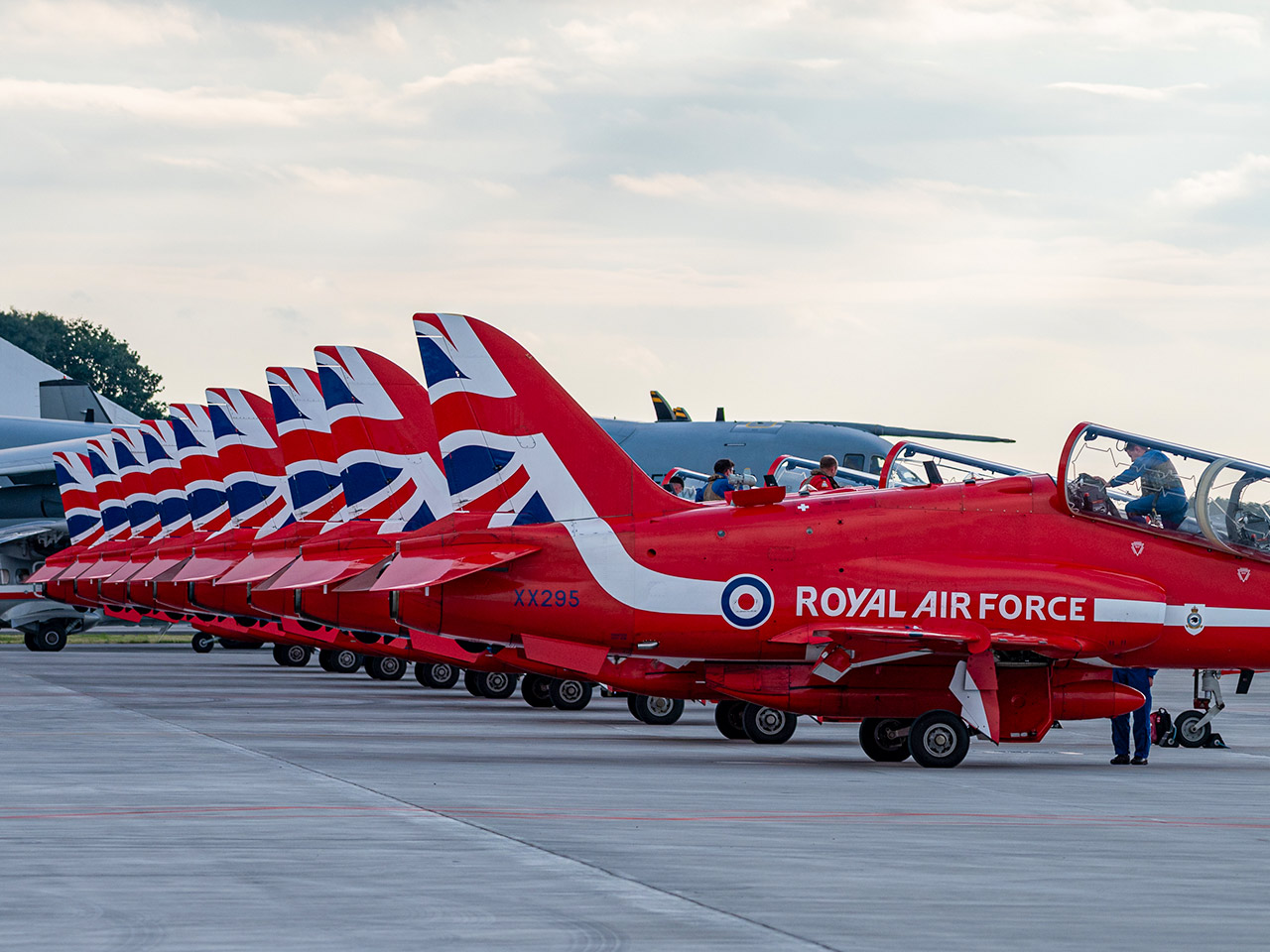
Our squadron has around 150 personnel, but we take only ten of us away on a weekend. And potentially, that could just be us. We also have the support of the Dye team, so we may have additional five people. So you're looking at around 15 people to maintain the ten aircraft we have. Each aircraft has its own designated engineer. For me, as Circus 5, I look after Red 5.
So you have ten pilots and 15 support staff on the road?
Yes, so we have around 15 support staff and ten pilots at any given time during the week. Sometimes we take more for larger shows, just to provide redundancy on personnel.
So is it manageable to do it with such a small number of people? Or do you sometimes work around the clock to make it work?
We do find it manageable, but it’s a small team. I think it’s mostly manageable thanks to the massive support team we have back at our parent unit, RAF Waddington. Those guys, when we return from the weekend, manage all the aircraft and do any depth maintenance needed to get us ready for the next weekend. But it’s our responsibility over the weekend when we take the jets away.
Do you ever wish to be a pilot when you see fighter jets flying around?
Honestly, I’ve never really considered being a pilot. I’ve always been interested in the engineering side of things. I love figuring things out — solving problems. The one thing that’s given me a massive appreciation for pilots is flying in the backseat. It really makes you realize how much work they do, and how much happens that us on the ground don’t see. So, the opportunity to fly backseat gives you a huge appreciation. In some ways, it’s made me want to be a pilot, but in other ways, I’ve loved the engineering side more, especially from seeing the results of my work.
So you fly backseat, for example, from England to Ostrava and then back?
Yes, we flew from England to Ostrava, with a quick pit stop for fuel in Germany before making our way into Ostrava, and then doing the flypast over Prague with the Gripens. It’s fantastic to be able to fly across Europe with these aircraft and maintain them while we’re on the road.
It’s like Uber for you.
Yeah, pretty much! It’s almost like a taxi service for us. We’ll fly backseat, but we don’t really have a responsibility in the air, other than keeping an eye out for traffic and maybe looking around in case any of our aircraft get too close. But, generally, once we’re in the air, we’re just enjoying the view.
Looking back, which moment of your career are you most proud of so far?
I definitely believe that the Circus 5 role I’ve taken part in this year is the highlight of my career. I’ve done some incredible things in the RAF, but I don’t think I’ll ever be able to top flying backseat, especially over London and Prague. We’ve had so many great opportunities this year, and I just don’t think I’ll be able to beat that.
What was it like carrying the Queen’s Colour during the RAF’s centenary parade? That’s a rare honour.
Carrying the RAF Queen’s Colour back in 2018 for the RAF 100 parade was another massive honour I was given. I had only been in the RAF for about eight months at the time, and I was specifically chosen to carry the Queen’s Colour during that parade. To be able to represent my country on the main stage was a fantastic opportunity. To be at Buckingham Palace in front of the late Majesty the Queen, as well as the entire royal family, after only being in the RAF a few months, was just a huge deal. I enjoyed every single moment of it. I thought that would be the highlight of my career, but then I joined the Circus team and flew back as part of the Red Arrows.
Can you tell us a little bit more about it — describe it for someone who doesn’t know what it is?
The Queen’s Colour at the time was one of seven standards carried by RAF personnel. They’re normally carried by commissioned officers. However, one of them, the Number One School Technical Training Queen’s Colour, is carried by a non-commissioned officer. It’s the only one in the entire armed forces carried by an NCO, and I was lucky enough to be chosen to carry that during the RAF 100 parade.
You were part of the Dye Team last year. What does it take to keep the Red Arrows’ signature coloured smoke display running smoothly on tour?
The Dye team is a unique role within the Air Force. It’s the only role in the whole RAF with this level of responsibility. When you’re responsible for ensuring the jets always have the red, white, and blue colour, it might seem quite simple, but there are many ways you can get it wrong. It’s a really small, close-knit team, and I was really lucky to be part of that in the 2024 season as we made our way across Canada. During that time, we displayed in several locations, and the colour was always as strong as we could make it.
Can you tell us how it works — the colours?
We mix the coloured dye with a sustainable mixture. In this case, it’s HVO — hydrogenated vegetable oil. We then adjust the strength by changing the amount of HVO. If you put in more HVO, the colour looks weaker. We try to get the dosages just right so that when it’s put into the aircraft, the colours are vibrant and deep. For big events like the King’s birthday flypast last year, we made the colours as strong as we could. We mix the dye in what we call the rig, which is then run alongside the aircraft. We plug it into each aircraft, and on top of the colours, we load the fuel separately. Then, we load the mixed solution into the aircraft. The key part is making sure we put the right colour in at the right time, and that the dosage is correct.
Has it ever happened that the colours were switched?
Yes, we’ve had an incident in the past where the red was loaded into the blue, and the blue was loaded into the red. Thankfully, it was caught before anything could happen, and we were able to sort it out. Since then, we’ve done a really good job of improving our policies and procedures to prevent it from happening again. We now have systems in place to stop that from occurring.
What kind of preparation goes into getting the aircraft ready for the show?
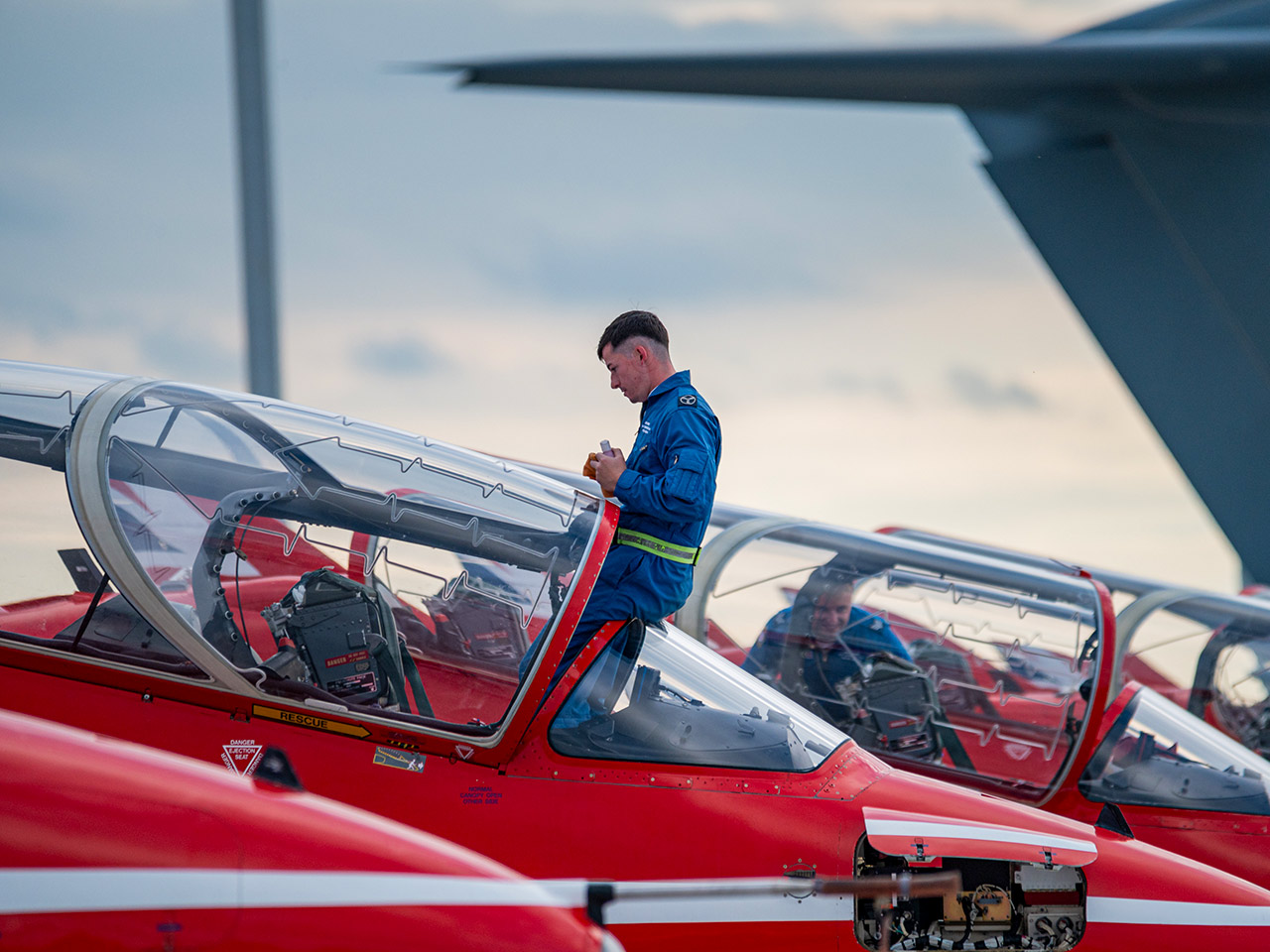
We have a team that comes in four hours prior to flying, and then the Circus team comes in three hours prior. We prepare the aircraft, and by the time the pilots walk out to our cast and crew, we’ve done things like removing the ground locks, removing the blanks, and performing a full visual check. We ensure the aircraft has enough oxygen and that everything is functioning properly. We then crew the pilots in, making sure they’re strapped in properly, the engines are running well, and all the avionics are working. We have a huge responsibility, and safety is a massive priority. We have numerous procedures in place to ensure nothing is missed.
What’s something most people don’t realise about what goes on behind a Red Arrows display?
There’s a huge team behind the Red Arrows. While we may only have 15 of us here, there are around 130 people back at Waddington preparing for the next weekend’s display. There are people working on custom aircraft engines and frames, preparing for next year’s display team, and ensuring everything is in top condition. It’s not just about taking things weekend by weekend — the amount of preparation and effort that goes into keeping these aircraft in the sky is phenomenal. These aircraft have over 9,000 flying hours and have been flying for 40 years. It takes an incredible team to keep them going.
What do you hope audiences take away when they see the Red Arrows perform — especially at events like NATO Days?
I really hope people are inspired to pursue aviation. I think it’s a phenomenal career, and I would definitely recommend anyone considering a career as an engineer or as a pilot to go for it. It’s an incredibly worthwhile career, and I’ve loved it since the moment I joined. If you can get on a display team and work with all these nations, there’s nothing better.
|
|

Is there anything you would like to tell the visitors and spectators of NATO Days?
I’d like to say thank you for having us. It’s been incredible to come over to this side of Europe and showcase our display and our team. I hope everyone’s enjoyed it. The hospitality has been fantastic, and we’d love to come back here again in the future.
It is the 25th edition of NATO Days. What is your impression of the event? How are you enjoying it? How is the energy of the crowd?
This has definitely been my favourite show with the Red Arrows. I’ve done three seasons here, and this one has been one of the best so far. We’ve got so many different display teams — the Turkish, the Croatians — nations I would never normally see. It’s amazing to go out and work with these people. We’ve really enjoyed being here.
I think NATO Days has a phenomenal ground display, and I’ve never seen anything like it before. You’ve got Leopard tanks, parachute teams, police demonstrations — the whole atmosphere here is incredibly well laid out and organized. I would love to come back as a spectator, not just as part of the airshow.
Are you looking forward to NATO Days 2026?
Absolutely, yes! I would love to come back next year. Maybe I’ll come back as a spectator and enjoy the show a bit more, but I would love to return with the Red Arrows.
Partners














.jpg)
.jpg)